
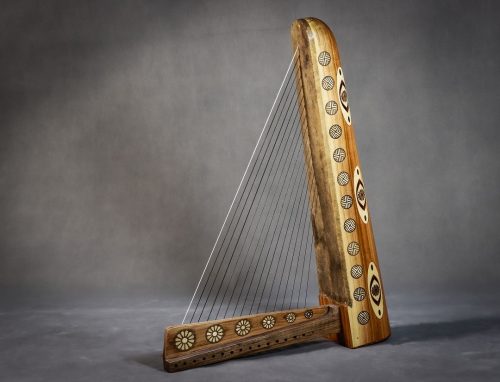

History of the Napirasu Harp
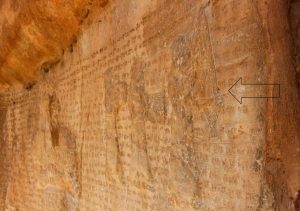
In three bas-reliefs from the (Kool Farah) carvings, dating back to the Elamite period (from the city of Izeh, present-day Khuzestan province), harps can be seen:
In the first bas-relief, three musicians dressed in long garments are moving to the right. Two musicians at the front of the row, that is, to the right, are playing harps. The first harpist holds a fourteen-string triangular harp vertically, while the second harpist carries a nine-string harp horizontally. A fourth musician, who plays a square percussion instrument, accompanies them. The vertical harpist plays with his right hand, and it is clear that he is holding the harp with his left arm and elbow. It appears to have fourteen strings, and the tassels (fringes) are tied at the base to form a decorative border, which seems to follow a specific imaginative style. Here, the decorative border is present only for the vertical harp.
In 2017, Rabeh Zand designed this instrument (the vertical triangular harp) and, after several rebuilds (to improve its sound quality) over the following years, unveiled it on a news network. After consulting with her dear friend, Dr. Shervin Vakili, she named the instrument “Napirasu,” which currently translates to “Moon Lady.” The reason for this naming was that, during the Elamite period in the 4th century BC, one of the most prominent and powerful queens of the time, the wife of King Untash-Napirisha, was immortalized in a bronze statue created by the bronze workers of Susa (now in the Louvre Museum in Paris). It is important to note that beneath the queen’s attire is an inscription addressed to the people, symbolizing the queen’s power during that era, and a ring on her left hand, which represents marriage and union. This statue is considered one of the earliest depictions of such symbolism.
Rabeh Zand also named her music group “Napirasu.”