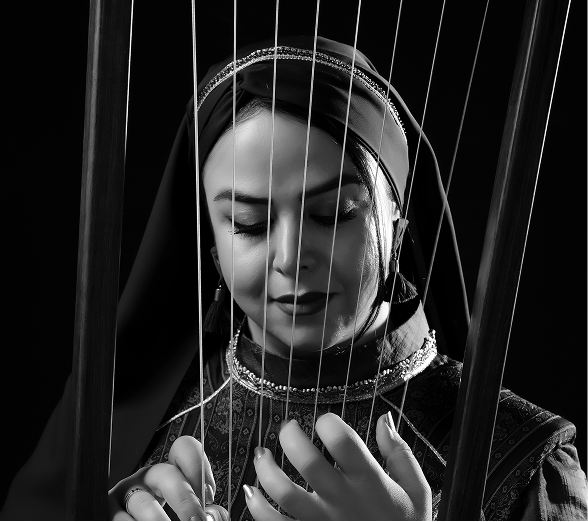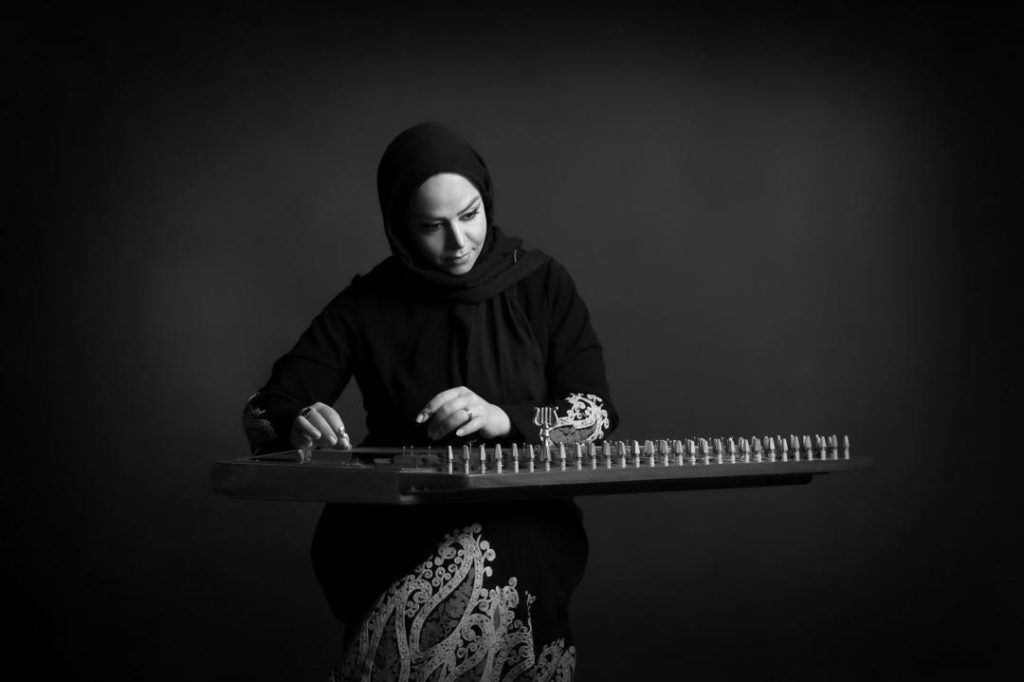
: Rabeh Zand
Musician, performer, composer, instructor, and researcher
On several strenuous paths
Born in 1982/09/17 & Tehran
: Written by
Professor Alireza MirAliNaghi
Although the Iranian Young Musicians Society knows Rababe Zand as an outstanding qanun player, the scope of her work and achievements goes far beyond a single title. Her professional spirit, which dedicates most of her time and energy to music rather than publicity or networking, has kept her commendable record from gaining full recognition among the general community of Iranian classical music practitioners. Rabeh Zand, a talented woman with a unique name unlike any other, having passed the age of forty, with her extensive and rich portfolio, is more deserving of introduction now than ever without any need for exaggeration. This note provides a brief overview of her busy and dynamic career.
Rababe was born into an art loving family. During her childhood, she became acquainted with the tonbak and seriously began studying music at the age of nine by learning the santur. After a year, she completed courses in the Orff music method and its instruments, and finally, at the age of eleven, she entered the Higher School of Music. She chose the qanun as her specialized instrument and studied under Master Malihe Saeedi. During her time at the music school, she benefited from prominent teachers in music theory, instrumentology, harmony, composition, and performance of various Iranian and international instruments.
Through her persistent efforts, by the age of fifteen, she officially joined professional orchestras and stepped onto the serious stages of the music scene. At sixteen, she began teaching children’s music and theoretical courses. After receiving her music diploma, she entered university and advanced studies in music. She officially graduated in Iranian music (Qanun performance), but in reality, her true education began after obtaining the degree.
She became a distinguished and constantly active figure in concerts and festivals in countries such as Iran, France, Germany, Greece, India, Georgia, Sweden, Norway, and Azerbaijan, known as a soloist, improviser, ensemble player, and choral singer, firmly establishing her name within the music community.
After earning her bachelor’s degree in music, Rabeh Zand once again pursued academic studies. In late 2006, she entered the world of cinema, majoring in screenwriting, and studied under Master Nasser Taghvai. She graduated in 2009 and, in the same year, decided to emigrate to live in Northern Europe with her mother. However, after about a year, she could not endure being away from her homeland and returned to Iran.
In 2011, under the guidance of Mr. Seifollah Shokri, she became acquainted with ancient musical instruments. Inspired by ancient inscriptions and the history of early civilizations, she focused her efforts on recreating and composing for Iran’s ancient instruments. Among these were the Mesopotamian Harp (Bebat-e Miyan Rudan, 4,700 years old), the Arjan Barbat (3,400 years old, associated with the Arjan cup inscriptions), the Narsina Harp, and the Choghamish Harp (dating to the Elamite period). She approached these instruments with a research-driven perspective, meticulously revising, reconstructing, and performing them.
During the same period, in 2011, a major milestone in her life occurred: with the goal of improving the sound of the qanun and achieving independence in instrument production eliminating the need to purchase Arabic and Turkish qanuns she began designing and building a new model of the Iranian Qanun. With a small investment and consultation from professional instrument makers and specialists in musical instrument engineering, she embarked on this challenging journey. Through determination and perseverance, by 2012, she had successfully established an official production line for the instrument. Her qanuns were launched under her exclusive brand name, “Raha,” entering the market for production and sales.
Rabeh Zand had been composing music since her teenage years, performing her works in various concerts and albums. In 2016, she released her first completely independent album, featuring her original compositions and qanun solos, titled “The Lawless Qanun” (with an introduction by Mir Alireza Mir’ali Naqi, critic and historian of Iranian classical music). The album was well received, topping the instrumental music CD charts for several months, and was nominated for the Contemporary Composition Award.
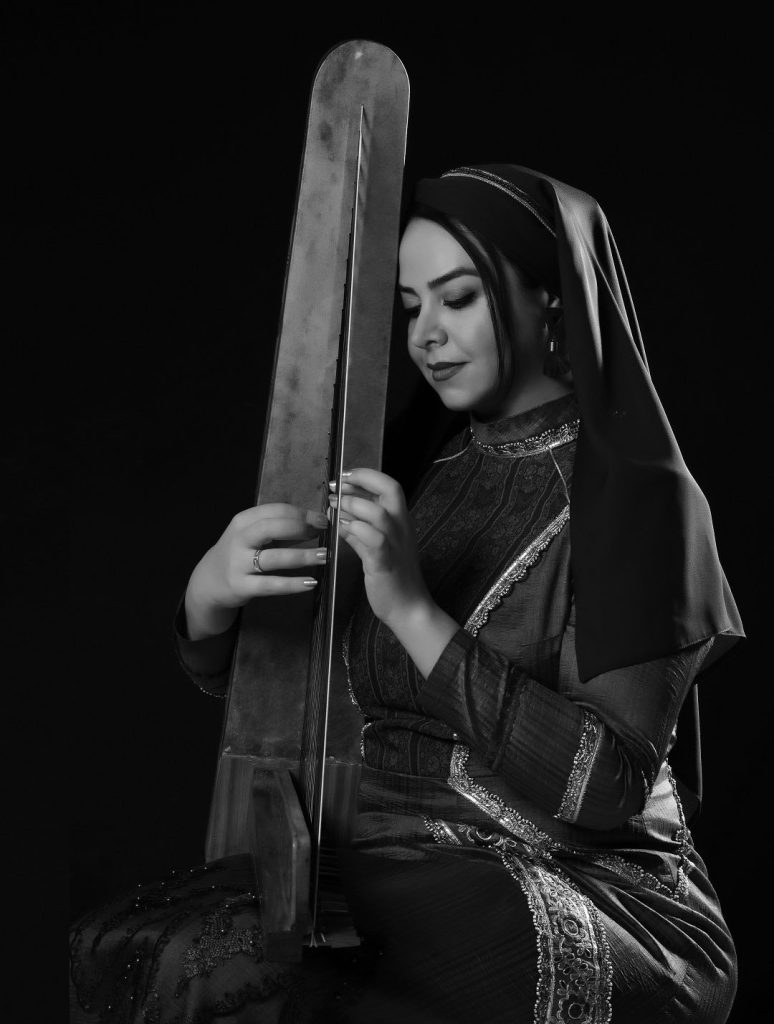
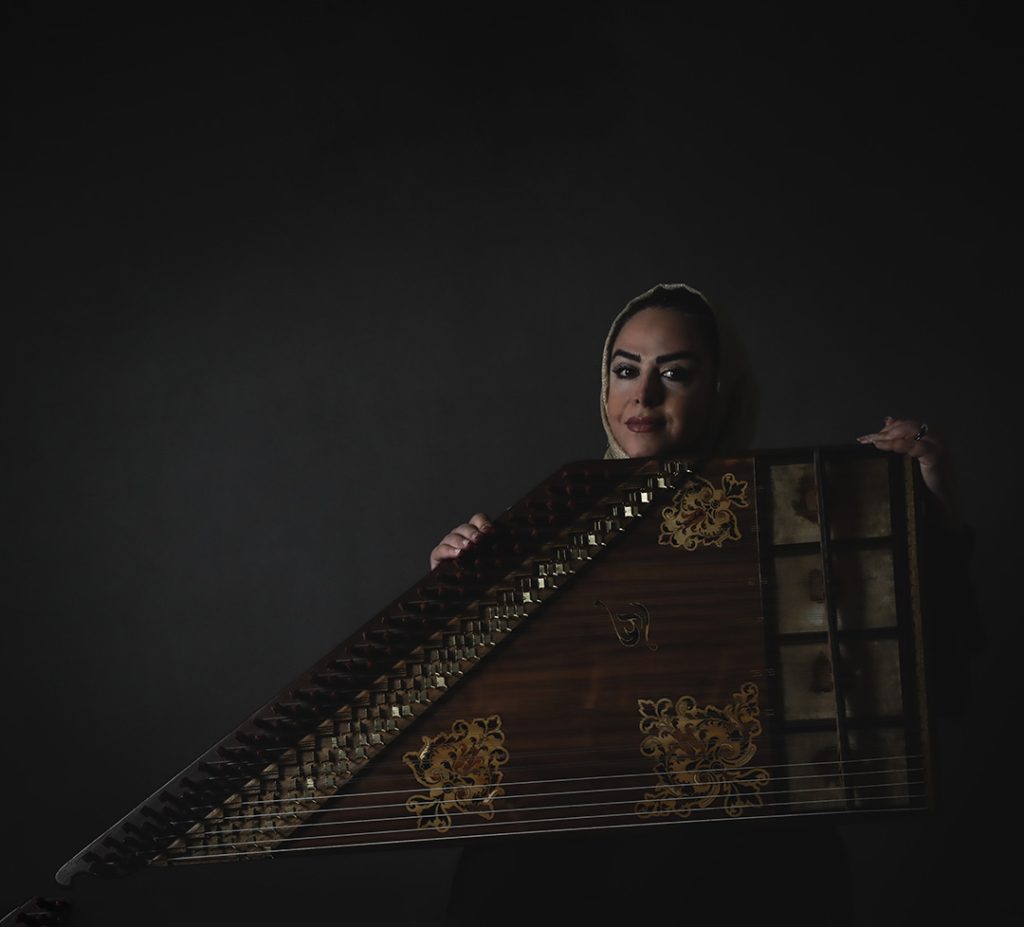
Her activities have never been limited. In 2018, she founded the Rabeh Academy, a specialized school for the qanun and ancient harps, to realize one of her long-cherished ideas: children’s music education combined with harp performance. For many years, based on both practical and theoretical considerations, she believed that the bells were not a suitable instrument for introducing music to Iranian children. Consequently, she designed a new instrument inspired by ancient motifs and named it the “Children’s Harp.”
For teaching this instrument, she wrote a structured instructional method (now in the final stages of publication) and continues to believe that with the growth and widespread adoption of this learning approach, the depth and breadth of musical education for Iranian children will reach its full potential.
In 2019, the young Iranian musician, sometimes called the “Qanun Daughter”, used her experience and research in ancient harps to reconstruct and perform a harp from the Elamite period. A year later, with a design based on surviving ancient motifs, she unveiled this harp on BBC Persian TV and named it “Napir-asu.”
Rabeh Zand’s goal in reviving these forgotten instruments has always been to remind people of Iran’s ancient musical culture and the long-standing tradition of skilled performance, as well as to reintroduce lost sounds. For years, she has continued to work closely with a group of instrument makers, researching and developing sound production and improving the construction of these instruments—all away from the controversies and publicity that unfortunately often overshadow serious work today.
In 2021, Rabeh founded a group called “Napir-asu”, in collaboration with performers of ancient harps and the Iranian qanun. With this unique ensemble, she officially launched the group’s activities through televised performances. The group continues to grow, and interestingly, the number of performers increases with each new project.
She has also continued her work in scholarly and educational publications: she is producing two volumes of method and etude books for the qanun, a teaching method for the Children’s Harp, specialized articles, and a podcast introducing Iran’s ancient harps, all of which are set to be published soon.
Like many Iranian elites, Rabeh Zand, despite her collaborative spirit, has often had to operate as a one-person army. Throughout Iranian history and culture, impactful works often had no alternative path. Perhaps this is the best approach: some individuals, on their own, become a complete cultural, artistic, and educational unit, echoing Rumi’s immortal lines: “Among thousands, one is a true dervish, the rest live in his shadow.”
The diligent “Qanun Daughter” of Iranian classical music is, of course, far too humble to accept such a comparison for herself. Yet, even a glance at her career without even considering the obvious challenges of being a woman in this perpetually turbulent region of the Middle East shows that her life and endeavors are far more meaningful than those whose presence is limited to media visibility and constant audiovisual